
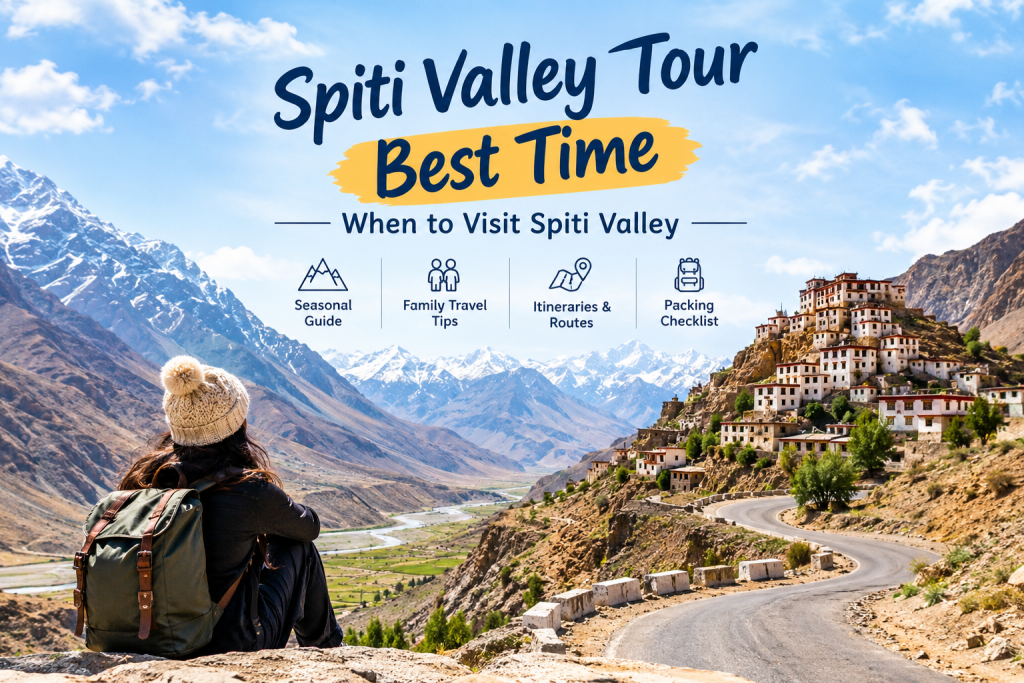
Choosing the best time for a Spiti Valley tour depends on what you want from the journey. Whether you are aiming for clear mountain passes, mild weather, snowscapes, fewer crowds, or a smooth family road trip, timing plays a huge role in your overall experience.
Spiti isn’t a place where you just arrive at a destination; the drive itself is a massive part of the trip. You will navigate dramatic mountain passes, cross high-altitude terrain, and pass through remote villages and ancient monasteries set against wide, tranquil valleys. Because conditions change rapidly here, picking the right season makes all the difference.
When to Go: A Quick Seasonal Overview
For most travelers, the primary window for a Spiti Valley tour runs from May to October. Roads are open, weather conditions are far more manageable, and local sights are accessible.
-
May–June: Ideal if you want to kick off the summer season with fewer tourists on the roads.
-
July–August: Great for travelers looking for greener landscapes, provided you don’t mind occasional monsoon disruptions.
-
September–October: Highly recommended for crystal-clear skies, crisp air, and a peaceful atmosphere.
If this is your first trip, targeting June through September offers the safest, most reliable weather window. However, keep in mind that Spiti isn’t your average hill station. Weather patterns shift fast, so checking real-time road conditions before setting off is essential.
Why Timing is Crucial for Your Trip
High altitudes and harsh mountain winters mean that visiting at the wrong time can turn a dream holiday into a stressful situation. Snow frequently blocks high passes, and sudden shifts in weather can disrupt road transport.
Selecting the right month helps you:
-
Navigate safer, more reliable road conditions
-
Spend more time outdoors exploring instead of being stranded
-
Visit ancient monasteries and villages in comfort
-
Enjoy sharp, unobstructed views of the Himalayas
-
Secure better accommodation and transport arrangements
Instead of simply asking when the valley opens, ask yourself what kind of terrain and weather you want to experience. Knowing the Spiti Valley tour best time can help you choose travel dates that match your preferred weather and road conditions.
Spiti Across the Seasons
Summer: May to June
As summer sets in, the valley begins thawing out. Daytime temperatures are pleasant, though nights remain chilly. It is a fantastic window for early-season road trips before tourist traffic hits its peak. Imagine driving along barren mountain corridors under cold morning skies, stopping at remote hamlets whenever a view catches your eye.
Highlights of visiting in May and June:
-
Comfortable daytime temperatures compared to winter
-
Smooth, accessible routes for long drives
-
Fewer tourists at major stops
-
Stunning light and clear conditions for photography
-
Easier exploration of local villages and monasteries
Monsoon & Late Summer: July to August
July and August show off a different side of the region, bringing subtle greenery and dramatic cloudscapes over the Himalayas. However, travelling now requires flexibility. Rain along the lower approaches can cause landslips, meaning your itinerary needs built-in buffer days. For adventurous road-trippers, navigating these shifting conditions is part of the fun.
Autumn: September to October
Ask seasoned Himalayan travellers, and many will point to September and early October as the highlight of the year. The summer crowds fade, the air turns crisp, and deep blue skies frame the rugged terrain. Nighttime temperatures drop significantly, but the sheer beauty and quiet roads make it a paradise for photographers and slow travelers alike.
Planning a Family Trip to Spiti
When selecting the best time to visit Spiti Valley with family, prioritize weather stability and road safety over chasing specific sights. The window between June and September is generally the most comfortable for multi-generational groups.
A family trip to Spiti involves long, winding drives and basic high-altitude infrastructure. To keep everyone comfortable, evaluate these factors before booking:
-
Drive Time: How well does your family handle 8 to 10 hours in a vehicle?
-
Altitude: High-altitude sickness can affect anyone. Schedule deliberate rest days to acclimatize.
-
Facilities: Medical access and luxury amenities are limited in remote areas.
-
Route Status: Choose routes with the most reliable road surfaces.
Top Places to Include in Your Itinerary
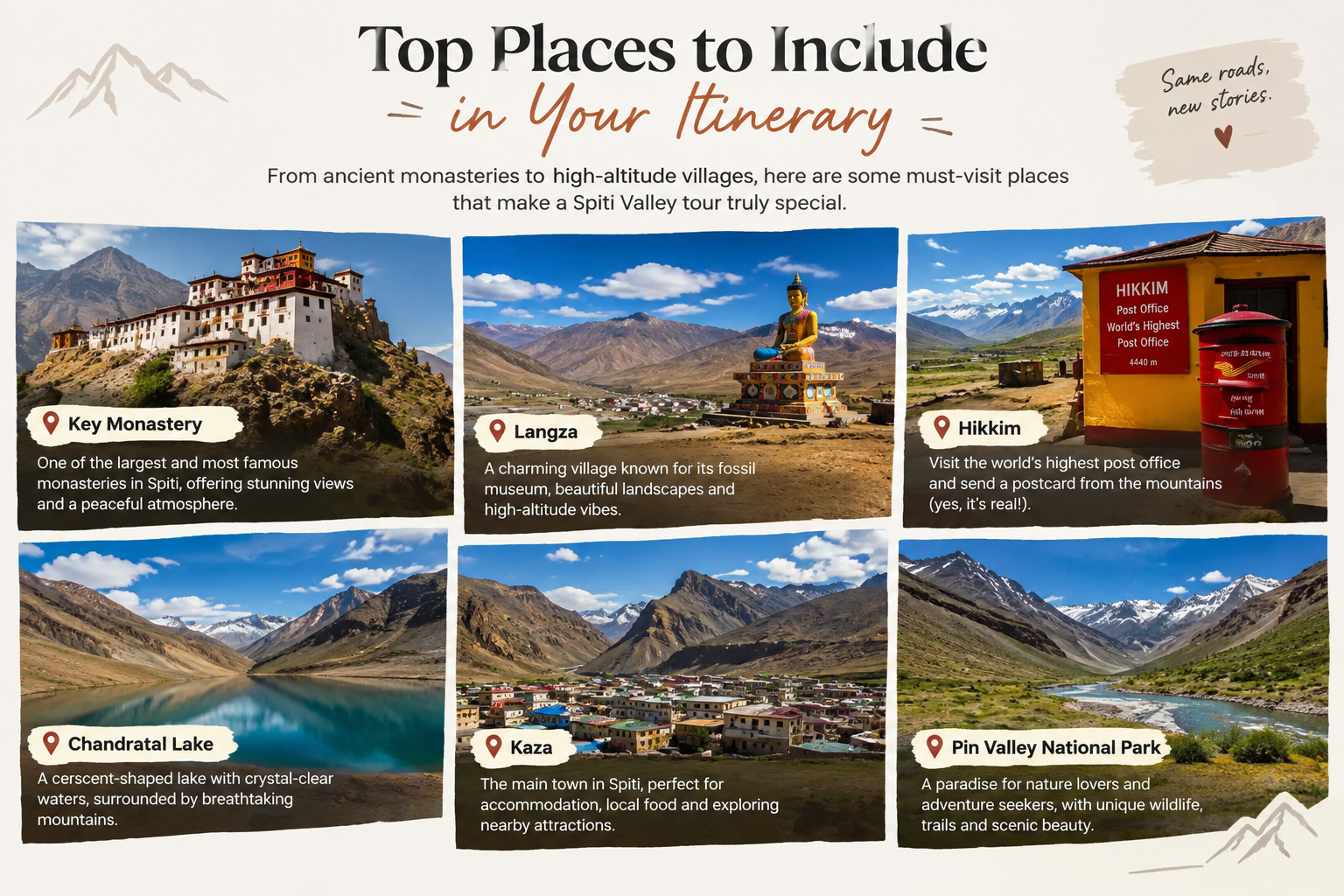
Once your dates are locked in, build your route around these key highlights:
-
Kaza: The commercial center of the valley, perfect for restocking supplies, finding lodging, and arranging local transport.
-
Key Monastery: Perched dramatically on a conical hill, this icon of Spiti offers breathtaking views of the river valley below.
-
Kibber: A peaceful, high-altitude village that serves as a sanctuary for snow leopards and a base for quiet walks.
-
Langza: Famous for its massive golden Buddha statue watching over the snow-capped mountains.
-
Hikkim: Home to one of the world’s highest post offices, where you can mail postcards straight from the Himalayas.
-
Chicham: Home to the famous Chicham Bridge, spanning a dizzying gorge with spectacular valley views.
If you’re interested in exploring lesser-known Himalayan destinations, check out our Offbeat Himachal Tour Package guide for more ideas.
Step-by-Step Planning Strategy
-
Pick Your Dates: Match your travel style to the season—whether you prefer warm summer days, vibrant autumn landscapes, or quiet roads.
-
Verify the Route: Routes via Shimla or Manali offer different terrain and open at different times of the year. Check current ground reports rather than relying on old blogs.
-
Allocate Sufficient Days: Avoid rushing. A good itinerary leaves extra time for acclimatization and unexpected road delays.
-
Pre-Book Stays: Accommodations range from basic guesthouses to authentic homestays. Secure key nights in advance during peak months.
-
Pack for Cold: Layering is essential. Even in high summer, evening temperatures can drop sharply.
What to Pack
-
Thermal base layers and a heavy down jacket
-
Sturdy, comfortable footwear for walking on uneven ground
-
High-SPF sunscreen, UV-protection sunglasses, and heavy-duty lip balm
-
Personal first-aid kit, including altitude sickness medication
-
Portable power bank (cold weather drains batteries quickly)
-
Sufficient cash, as ATMs and digital payment networks are unreliable
DIY vs. Booking a Spiti Valley Tour Package
Choosing between an independent trip and a Spiti Valley tour package depends entirely on how much logistical planning you want to handle.
A pre-arranged tour package takes care of transport, inner-line permits, homestays, and driver arrangements, making it a stress-free option for first-timers or families. On the other hand, travelling independently gives you full freedom to set your own pace, linger longer in remote villages, and change plans on the fly.
Essential Travel Advice for First-Timers
-
Take Altitude Seriously: Give your body at least 24–48 hours to adjust before attempting heavy physical activity.
-
Cash is King: Do not count on digital wallets or working ATMs outside of major hubs like Kaza.
-
Disconnect to Reconnect: Mobile signals drop off frequently across the valley. Download offline maps and inform family ahead of time.
-
Leave No Trace: Spiti’s ecosystem is fragile. Carry your trash back to major towns for proper disposal and respect local monastic customs.
Before planning your trip, check the latest road and travel conditions on the official Himachal Pradesh government website.
Frequently Asked Questions
What is the Spiti Valley tour best time for first-time travellers?
Overall, June through September offers the most stable conditions, accessible roads, and comfortable weather for touring the valley.
Is winter travel recommended in Spiti?
Winter travel is strictly for experienced, well-prepared adventure travellers. Temperatures plummet below -20°C, high passes close, and sub-zero conditions make logistics extremely challenging.
How many days do I need for a complete trip?
Plan for at least 8 to 10 days. This allows adequate time for long mountain drives, acclimatization rest days, and unexpected weather delays without feeling rushed.